Drives · Fans · Pumps · Compressors
VFD replacement for HVAC and refrigeration
Variable frequency drives sized to the motor, wired, programmed and watched under load, for businesses in Springdale and across Northwest Arkansas.
Chapter 01
What a VFD does and what it looks like when one fails
A variable frequency drive, or VFD, controls the speed of an AC motor by changing the frequency and voltage it is fed. On an HVAC system that usually means a supply fan, a return fan, a cooling tower fan or a pump. In refrigeration it can mean a condenser fan or a compressor. Instead of running flat out and cycling off, the motor runs at the speed the load needs.
When a drive fails, the equipment behind it tells you. The fan will not start, or starts and trips on overcurrent. The display shows a fault code. The cabinet is hot to the touch, or you smell hot electronics. The motor runs at one fixed speed because someone put the drive in bypass to keep the building cool. Bypass is a good temporary fix and a poor permanent one, because the motor loses the soft start that protects it.
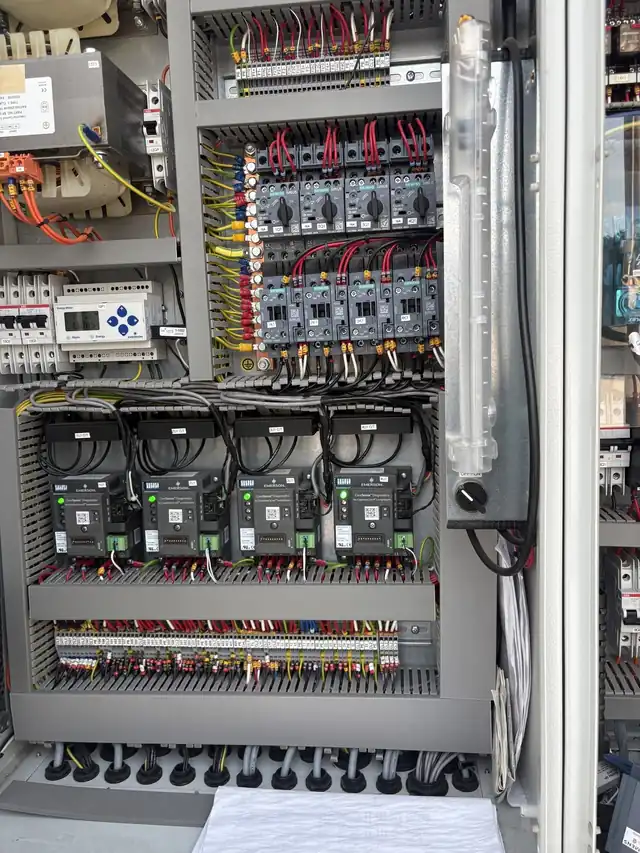
An open commercial refrigeration control cabinet with rows of contactors, compressor controllers and neat wiring
How Trinity swaps a drive
First, lock out and tag the supply, then photograph and label the wiring and write down the drive settings before anything is disconnected. The motor nameplate decides the replacement: voltage, phase, horsepower and full-load amps. A drive sized to the motor, not to whatever is on the shelf, is what keeps it from tripping on the first warm day.
The new drive is mounted, wired for power, motor and control, and programmed with the old parameters: acceleration and deceleration ramps, minimum and maximum speed, the control signal it follows. Then we bring the system up and watch it work. We check amp draw against the nameplate, confirm the fan or pump actually follows its command, and make sure the unit shuts down the way it should.
VFD work often turns up the cause of the failure: a blown fuse upstream, a motor with failing bearings, a cabinet with no airflow. We look at the motor and the cabinet before we call the job finished.
Chapter 03
Keeping the new drive alive
Drives hate heat and dust more than anything else. The cabinet or the room needs airflow, the cooling fans inside the drive need to spin, and the filters on the enclosure need to be changed. Loose power terminals and a motor that is drawing too many amps wear out a drive early, and both are things a visit can catch.
Electrical and safety components are on every Trinity System Care visit, and a membership puts those visits on the calendar. And if one quits on a Sunday, the number is (479) 325-1075, answered 24 hours a day from Springdale.
Trinity Air Conditioning and Refrigeration · AR HVACR #0003128 · Call (479) 325-1075, open 24/7.
Signs a drive is going
What to watch for before it quits
- A fault code that keeps coming back after a reset.
- An overcurrent or overtemperature trip on startup.
- A fan or pump stuck at one speed, or running in bypass.
- A drive cabinet that is hot or dusty, with a fan inside that no longer spins.
- A motor that hums, hunts or speeds up and slows down on its own.
Where this fits
Drives sit inside bigger systems
A drive that feeds a rooftop blower is covered with RTU and AHU service and repair. One on a compressor or condenser fan is part of commercial refrigeration and sometimes compressor repair. Building-wide controls live under automation services. To keep a drive on a schedule, read about the Trinity memberships, or reach us at (479) 325-1075 or on the contact page.