Mastic · Foil tape · Boots · Plenums
Duct sealing for Northwest Arkansas homes
Mastic and foil tape on the seams, boots and plenum connections where conditioned air escapes into the attic or crawlspace.
Chapter 01
Where the cooled air goes before it reaches the room
A duct system is supposed to be a sealed pipe. In most houses it is not. Every seam, every collar where a branch meets the trunk, every boot where the duct meets the register opening is a place for air to escape into the attic, the crawlspace or the wall cavity, and the ones you cannot see are the ones that matter.
Supply leaks send cooled or heated air where nobody lives. Return leaks do the reverse: they pull dusty, hot or damp air from the attic or crawlspace into the system and spread it through the house. Either way the equipment runs longer to make up the difference, rooms at the end of the run get less air, and the house feels drier, dustier or stuffier than it should.
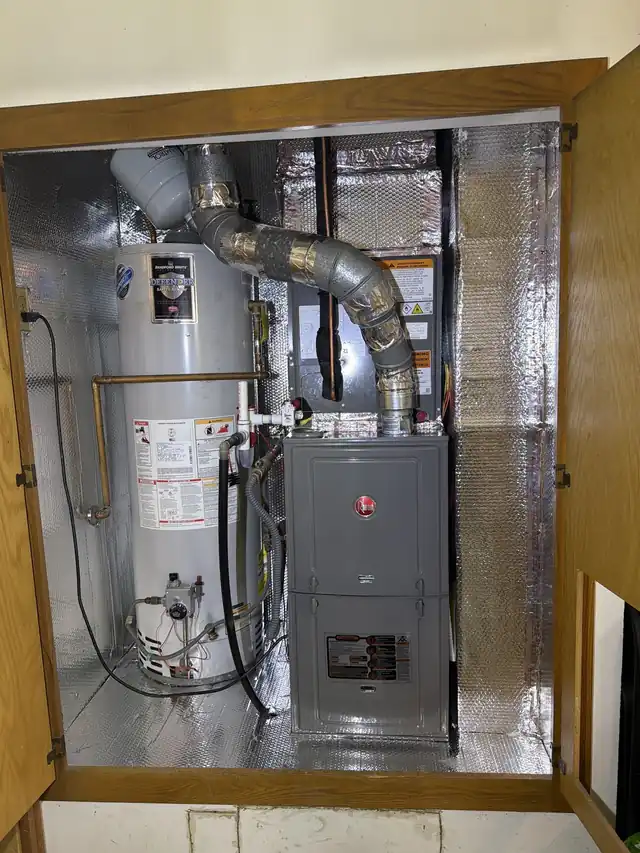
A Rheem gas furnace and a water heater installed in a foil-lined closet with a new flue pipe
Mastic on every joint, not tape on the worst one
Cloth duct tape is the usual first repair and it does not last, because the adhesive dries out and lets go. We seal with mastic, the thick paste that cures into a flexible skin, and foil tape rated for ducts, on the surfaces we have cleaned first so it actually bonds.
The work follows the path of the air. We seal the plenum and its connection to the air handler, the trunk line seams, each branch collar, and the boot-to-ceiling or boot-to-floor gap at every register, where a surprising amount of air escapes. Return ducts and the return plenum get the same attention. Afterward we check airflow at the registers to see that the rooms we were told about are actually moving more air.
If a section is too far gone to hold a seal, we say so, and the answer moves to our duct repair work instead.
Chapter 03
What you should notice once it is sealed
The change is usually plain enough to feel. Rooms at the end of the run catch up, the air handler cycles off sooner, and there is less dust settling on the furniture. A sealed duct system also keeps attic and crawlspace air out of the house, which matters if anyone in the home is sensitive to dust or humidity.
Sealing holds as long as the ducts are not disturbed, so the thing to watch is whatever moves them: a new line pulled through the attic, a technician from another trade crawling over the trunk. The Trinity System Care checklist includes an Airflow and Filtration check on every visit, and our memberships include two a year. Call (479) 325-1075 from anywhere in Springdale or Northwest Arkansas.
Trinity Air Conditioning and Refrigeration · AR HVACR #0003128 · Call (479) 325-1075, open 24/7.
Sealing or repair
Which job does your duct system need?
Seal it when the runs are sound
- Seams and collars leak but the metal and flex are intact.
- Dust blows from the registers at startup.
- Rooms at the end of the run lag behind the rest.
Repair or replace when they are not
- Sections are crushed, collapsed or rusted through.
- Insulation has soaked and fallen away.
- The plenum has split from the air handler.
That is the work on our duct repair and maintenance page.