5 Warning Signs Your HVAC System Is Silently Draining Your Wallet and How to Stop It
Your heating and cooling system is one of the hardest-working components in your home, running thousands of hours each year to keep your family comfortable.
April 1, 2026 · 4 min read
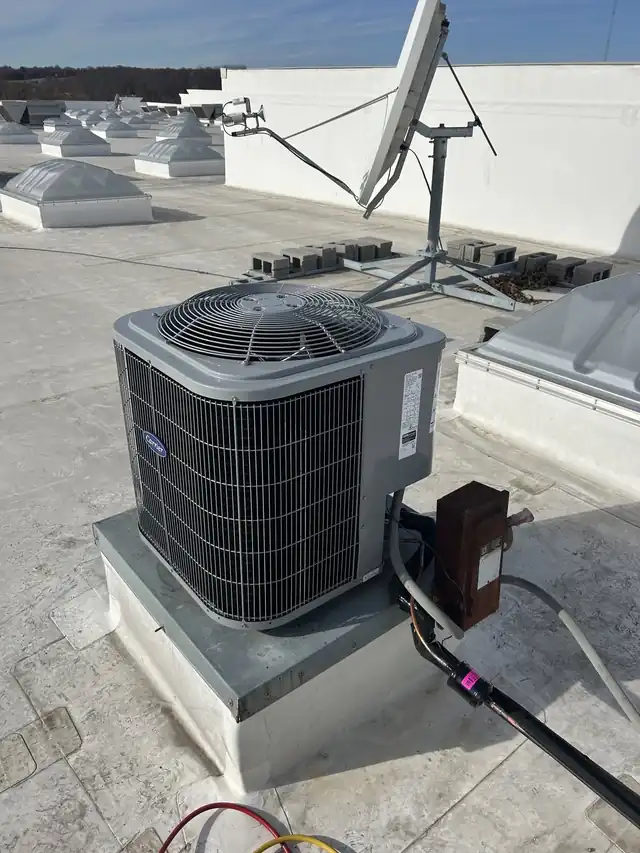
Your heating and cooling system is one of the hardest-working components in your home, running thousands of hours each year to keep your family comfortable. According to the U.S. Department of Energy, HVAC systems account for roughly 48% of the average household’s total energy consumption. When something goes wrong, even a minor inefficiency can translate into hundreds of dollars in wasted energy costs annually. At Trinity Air Conditioning and Refrigeration, we help homeowners across Springdale, AR, Rogers, AR, Lowell, AR, Tontitown, AR, Johnson, AR, and Elm Springs, AR identify these costly problems before they spiral out of control. Here are five critical warning signs that your system may be quietly emptying your bank account.
1. Unexplained Spikes in Your Energy Bills
One of the most telling indicators of an HVAC problem is a sudden or gradual increase in your monthly utility bills without a corresponding change in usage habits. If you are running your system at the same temperatures and schedules but paying significantly more, something is forcing your equipment to work harder than it should. Common culprits include refrigerant leaks, failing compressors, dirty evaporator coils, and deteriorating ductwork that allows conditioned air to escape into attics or crawl spaces.
We recommend comparing your bills month over month and year over year to establish a baseline. A jump of 15% or more that cannot be explained by rate increases or weather extremes almost always points to an equipment issue. Our AC repair and heating repair technicians use diagnostic tools to pinpoint exactly where efficiency losses are occurring, saving you from months of overpaying.
2. Uneven Temperatures and Hot or Cold Spots Throughout Your Home
Walking from one room to another and feeling a noticeable temperature difference is more than an annoyance. It signals that your system is struggling to distribute air properly. This could stem from blocked or leaking ducts, an improperly sized unit, or a blower motor that is losing power. When your system cannot maintain consistent temperatures, it runs longer cycles, consuming more electricity or gas in the process.
Studies from the Environmental Protection Agency suggest that duct leakage alone can reduce system efficiency by 20 to 30 percent in a typical home. During our heating service and air conditioning service calls, we inspect the entire airflow pathway to ensure every room receives the conditioned air it needs without forcing the system into overtime.
3. Strange Noises or Unusual Odors Coming from Your System
A healthy HVAC system operates relatively quietly. If you start hearing banging, grinding, squealing, or clicking sounds, mechanical components are likely wearing out or have come loose. These noises often precede complete component failure, which leads to expensive emergency repairs. Musty or burning odors can indicate mold growth inside ductwork or electrical issues within the unit itself.
Addressing these symptoms early is far less costly than waiting for a total breakdown. We are a new family-owned business with a combined experience of 35 years, and that depth of knowledge allows us to accurately diagnose problems by sound and smell before they escalate into major expenses. As a Christian-based company, we prioritize family values, excellent customer service, and 24/7 availability, so you never have to wait when something sounds or smells wrong.
4. Your System Runs Constantly or Cycles On and Off Frequently
Short cycling, where the system turns on and off repeatedly in brief intervals, and continuous running are both signs of serious inefficiency. Short cycling often results from an oversized unit, a malfunctioning thermostat, or a refrigerant charge issue. Continuous running usually means the system cannot reach the desired temperature, possibly due to insulation problems, a failing compressor, or extremely dirty filters restricting airflow.
Both scenarios drastically increase wear on components and inflate energy costs. During a thorough inspection, we evaluate refrigerant levels, thermostat calibration, electrical connections, and airflow measurements to determine the root cause and restore proper cycling behavior.
5. Your System Is More Than 10 to 15 Years Old Without Major Upgrades
HVAC technology has advanced significantly over the past decade. Older systems often operate at SEER ratings of 8 to 10, while modern equipment achieves ratings of 15 to 20 or higher. If your system has crossed the decade mark, it is likely consuming far more energy than a current model would require for the same comfort output.
Here are steps you can take right now to stop your HVAC system from draining your wallet:
- Schedule professional maintenance at least twice per year to catch problems before they become costly repairs
- Replace air filters every 30 to 90 days depending on household factors like pets and allergies
- Seal visible gaps around ductwork and request a professional duct inspection
- Upgrade to a programmable or smart thermostat to optimize runtime and reduce waste
- Request an energy efficiency evaluation from a qualified technician to identify hidden losses
Do not let a struggling HVAC system quietly drain your finances. Contact Trinity Air Conditioning and Refrigeration today to schedule an inspection and start saving.
Trinity Air Conditioning and Refrigeration, (479) 325-1075
Call (479) 325-1075More articles
What a Walk-In Cooler Does Before It Fails, and What to Do at 11 p.m.
A walk-in rarely dies without warning, and most of the warnings are visible from the kitchen floor.
Why Your Ice Machine Makes Thin, Slow or Cloudy Ice
Most ice machine complaints trace back to water, airflow or a seal, and an owner can check several of them in ten minutes.