Why Your Ice Machine Makes Thin, Slow or Cloudy Ice
Most ice machine complaints trace back to water, airflow or a seal, and an owner can check several of them in ten minutes.
October 1, 2026 · 4 min read
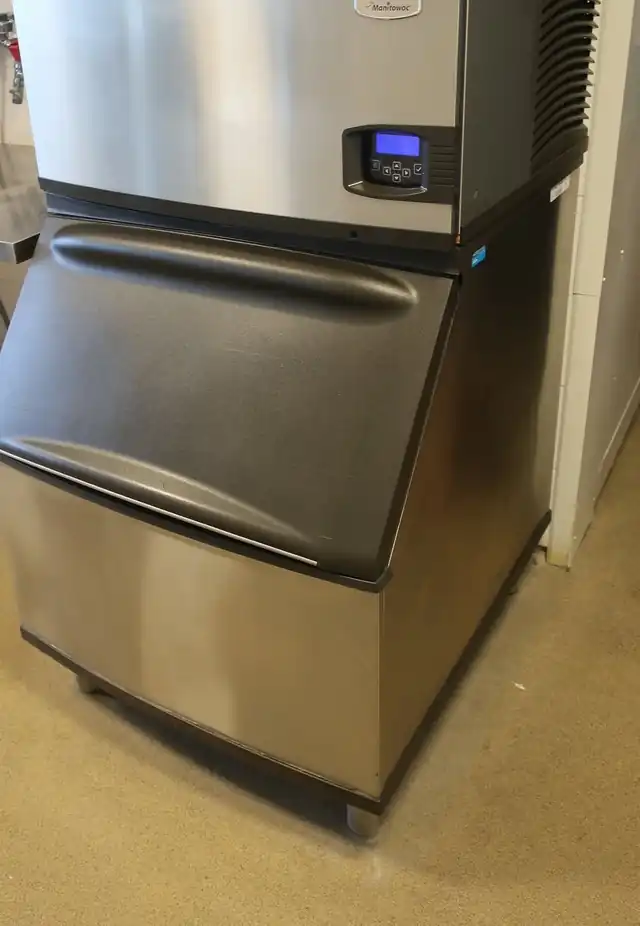
Ice is food. Customers put it straight into a glass, so when your machine starts making thin, slushy, slow or cloudy ice, it deserves attention before it turns into a service call at the worst possible time. The good news is that most ice machine complaints trace back to the same four places: the water, the filter, the airflow around the machine, and the seals on the bin. Here is what each one looks like and what you can check yourself.
Scale is the usual suspect
An ice machine freezes water on an evaporator plate and then releases it as a batch. Anything dissolved in that water stays behind as the ice forms. Over months, minerals build up as a hard, chalky film on the evaporator, the water distribution parts and the float or sensors. Scale insulates the plate so it freezes less efficiently, and it can block tiny water holes so the plate wets unevenly.
What you see is ice that's thin, misshapen, hollow in the middle or slow to arrive. Cubes may look cloudy or carry a white fleck. Cleaning and descaling is the fix, and it should be done with a cleaner made for ice machines, following the maker's instructions. Please don't improvise with whatever chemical is under the sink. Anything left in the machine ends up in the ice.
Water filters wear out quietly
A filter that has done its job for too long stops doing it, and it can restrict flow as well. Low flow means the machine takes longer to fill, and slow fill means slow ice. A tired filter can also leave you with off tastes or cloudy cubes, because the water is reaching the plate with more in it than the machine can handle. If you can't remember the last time the filter changed, that is your answer. Put a date on the housing when you swap it.
Air has to get in, and the heat has to get out
An air-cooled ice machine rejects heat through its condenser, so it needs clear space to pull air in and push warm air out. Check three things. First, the clearance around the machine: boxes, shelves or a wall pushed up against the vents choke it. Second, the condenser filter or coil: a mat of dust and kitchen grease slows the whole process. Third, the room. A machine tucked beside a fryer or a dish machine lives in hot, greasy air all day. When a machine runs hot, it makes less ice and works harder doing it.
Many machines have a washable filter or a coil you can see from the outside. Clean what's clearly meant for you to clean, and leave anything inside the cabinet to a technician.
The bin matters too
If the ice is fine when it drops but the bin never seems to fill, look at the bin itself. A worn door, a gasket that no longer seals or a door left ajar lets warm air in, and the ice melts faster than the machine can make it. Check that the door closes fully and that the seal isn't torn. Also look for water in the bottom of the bin and for drain lines that are backing up.
A ten-minute check, and when to call
- Look at the ice. Is it thin, hollow, slushy or cloudy? Note which, and note when it started.
- Check the clearance. Nothing should be crowding the vents or the sides of the machine.
- Check the condenser filter or the visible coil for dust and grease.
- Find the water filter and read the date on it. If there isn't one, that is worth knowing too.
- Inspect the bin door and seal. Look for tears, gaps or a door that won't latch.
- Look under and around the machine for water on the floor.
Call a technician when the machine has stopped making ice altogether, when it is leaking, when it makes a grinding or buzzing sound it didn't make last week, or when cleaning and clearing the airflow haven't changed anything. Those point to parts inside the cabinet, such as the water inlet valve, the pump, a sensor or the refrigeration circuit, and those are not owner repairs.
Where Trinity fits
Trinity Air Conditioning and Refrigeration in Springdale services ice machines for restaurants and other commercial kitchens across Northwest Arkansas. You can read more on Trinity's ice machine page at /restaurant-services/ice-machines. Their Free Visual Equipment Check includes your ice machine along with your walk-ins, reach-ins, prep tables, HVAC and hoods. There are no gauges and no disassembly, and you get written findings after every visit. If the machine is down tonight, Trinity is open 24 hours, seven days a week, and 24/7 emergency service is always included for restaurants. Call (479) 325-1075.
Trinity Air Conditioning and Refrigeration, (479) 325-1075
Call (479) 325-1075More articles
What a Walk-In Cooler Does Before It Fails, and What to Do at 11 p.m.
A walk-in rarely dies without warning, and most of the warnings are visible from the kitchen floor.
What a Trinity System Care Visit Checks, and How the Two Memberships Differ
Every membership includes two System Care visits a year, and the checklist behind them has seven sections.