What a Trinity System Care Visit Checks, and How the Two Memberships Differ
Every membership includes two System Care visits a year, and the checklist behind them has seven sections.
October 1, 2026 · 3 min read
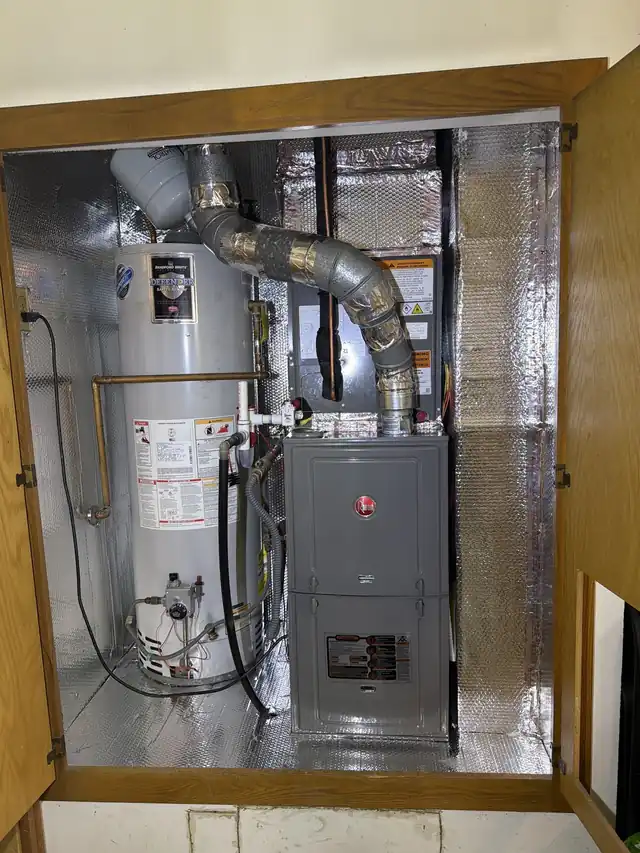
Most homeowners know their system needs attention and still can't say what a maintenance visit actually involves. Trinity Air Conditioning and Refrigeration, based in Springdale, builds its memberships around a visit called Trinity System Care, with a written checklist in seven sections. This post walks through each section in plain terms, then lays the two Trinity Priority Memberships side by side so you can see which one fits your house.
The seven sections of a System Care visit
- Thermostat and Controls. The thermostat is the system's brain. A tech confirms it calls for heating and cooling correctly and that the settings match what you actually want.
- Airflow and Filtration. A clogged filter or a restricted return starves the whole system. Airflow is the first thing worth checking because so many other problems start there.
- Electrical and Safety Components. Capacitors, contactors, wiring connections and safety devices wear out. Catching a weak part before it fails is the entire point of looking.
- Refrigerant System Check. The sealed refrigerant circuit is what moves heat out of your house in summer. The check looks at how that circuit is behaving.
- Outdoor Unit. The condenser sits outside in dirt, pollen, leaves and weather. The check covers its condition and the area around it.
- Drainage and Moisture Control. Cooling pulls water out of the air, and that water has to go somewhere. Clogged condensate lines and full drain pans cause water damage and shutdowns.
- System Performance Review. At the end, the technician steps back and looks at how the system is running as a whole, then gives you a system status summary.
That last item is easy to overlook and worth noting. The visit ends with a system status summary for you, the homeowner, so the next decision, whether that is a repair, a watch-and-wait or a replacement conversation, starts from facts instead of a hunch. It also gives you something to compare against next season, which is how slow changes in a system become visible before they become expensive.
What both memberships include
Trinity Guardian Care and Trinity Priority Plus share the same core. Each includes two System Care visits a year for a single system and two annual HVAC service visits, with the standard service visit charge waived. Each includes a priority seasonal system review and front-of-line priority scheduling. The differences are in the price, the discounts, the warranty and the sign-up credit.
Guardian Care and Priority Plus, side by side
- Trinity Guardian Care: $29.99 a month, a $500 sign-up credit, 15% off HVAC repairs, a member service visit rate of $30 (the regular rate is $75), a two-year warranty on parts replaced while the membership is active, and $11.99 a month for each additional system.
- Trinity Priority Plus: $14.99 a month, a $250 sign-up credit, 10% off HVAC repairs, a member service visit rate of $55 (the regular rate is $75), a one-year warranty on parts replaced while the membership is active, and $5.99 a month for each additional system.
How the sign-up credit actually works
Read this part carefully, because it's where memberships get misunderstood. The sign-up credit is applied only toward the purchase of a new HVAC system installation. It is not a monthly credit, it has no cash value, and it doesn't apply to repairs or maintenance. If you never replace your system, you will still get the visits, the discounts and the warranty. But the credit is something you use when the day comes to buy a new system, not something that offsets your monthly bill.
Which one fits
Guardian Care suits a home with an older system, or a household that expects repairs and wants the deeper discount, the lower visit rate and the longer parts warranty working for it. It also carries the larger credit toward a future installation. Priority Plus suits a newer or lower-use system where you mainly want the two yearly check-ups, priority scheduling and a lower monthly cost. Either way, a second system in the house costs less to add than the first.
If you're unsure, ask. Trinity serves homes across Northwest Arkansas and is open 24 hours, seven days a week. Call (479) 325-1075 and talk through your system and the two plans before you sign up for anything. Bring the age of your equipment, how many systems you have and whether you expect to replace one soon, because those three answers usually decide which plan makes sense.
Trinity Air Conditioning and Refrigeration, (479) 325-1075
Call (479) 325-1075More articles
What a Walk-In Cooler Does Before It Fails, and What to Do at 11 p.m.
A walk-in rarely dies without warning, and most of the warnings are visible from the kitchen floor.
Why Your Ice Machine Makes Thin, Slow or Cloudy Ice
Most ice machine complaints trace back to water, airflow or a seal, and an owner can check several of them in ten minutes.