How to Build a Home Service Documentation System That Protects Your Family and Saves Money on Repairs
Picture the moment your furnace fails on a cold January night, and the technician on the phone asks when the unit was installed, what model it is, and whether the blower motor was replaced last year.
September 1, 2026 · 4 min read
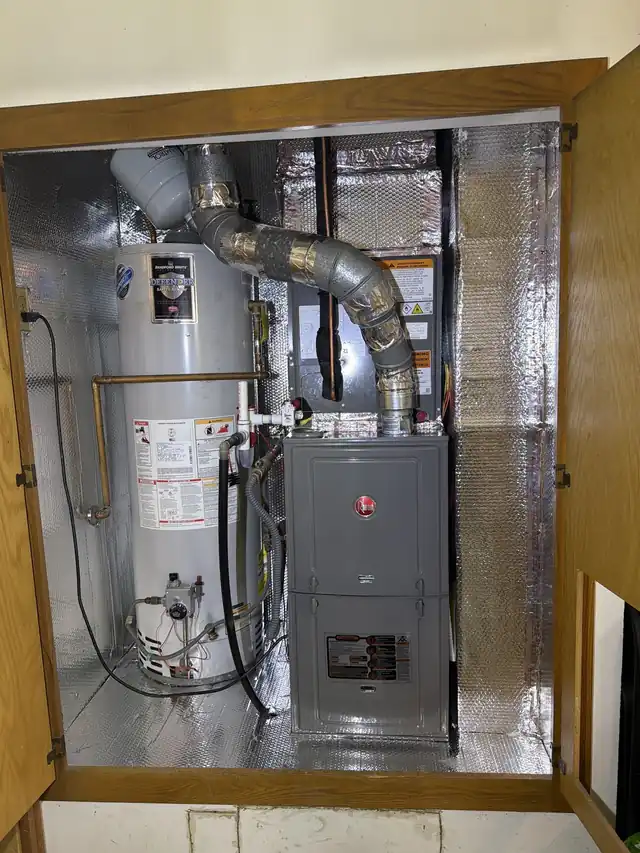
Picture the moment your furnace fails on a cold January night, and the technician on the phone asks when the unit was installed, what model it is, and whether the blower motor was replaced last year. If you cannot answer, the diagnosis slows down, parts orders stall, and the repair costs more than it should. A well-kept home service documentation system removes that uncertainty. It turns a stressful emergency into a quick, organized exchange of information that gets your home comfortable again faster.
At Trinity Air Conditioning and Refrigeration, we work with heating and cooling equipment across Springdale, Lowell, Rogers, Tontitown, Johnson, and Elm Springs, AR, and we see how much easier repairs become when a homeowner keeps good records. This guide walks you through building that system from scratch, so your family stays protected and your repair budget stays predictable.
Start by Collecting the Core Equipment Data
Every documentation system begins with the hard facts about your equipment. Before you can track service history, you need to know exactly what you own. Walk to your air conditioner, furnace, and any refrigeration units, and photograph the data plates. These metal or sticker labels carry the information a technician needs to order parts and confirm capacity.
Record the following details for each piece of equipment in your home:
- Manufacturer and model number: These identify the exact unit and guide parts selection during any repair.
- Serial number: This confirms the production run and helps verify warranty coverage.
- Installation date: Knowing the age tells you where the equipment sits in its expected service life.
- Rated capacity: AC tonnage or furnace BTU output confirms the system is sized correctly for the space.
- Refrigerant type: R-410A or older R-22 systems require different handling and pricing during service.
Store these facts in one place, whether a notebook, a spreadsheet, or a phone folder with the photographs. The point is that the information should be findable in under a minute. When you call Trinity Air Conditioning and Refrigeration for service, having these numbers ready shortens the diagnostic step and helps us arrive with the correct parts on the truck.
Track Every Service Visit With Dates and Details
The second stage is building a running log of everything done to your systems. A repair or maintenance visit is not just a moment in time; it is a data point that reveals patterns. If a capacitor fails twice in three years, that repetition points to a deeper voltage or heat problem worth investigating. Without records, you would treat each failure as an isolated event and pay for the same fix again and again.
Each entry in your service log should capture the date, the technician who performed the work, the specific task or repair, and any parts that were replaced. Note the measurements too when they are available, such as refrigerant pressures, temperature splits across the coil, or amperage draw on the compressor. These readings create a baseline. When we return for a future visit, comparing new numbers against your recorded history tells us instantly whether a component is drifting out of tolerance.
Good records also protect your family in ways that go beyond dollars. A furnace with a documented cracked heat exchanger inspection gives you confidence there is no carbon monoxide risk. A refrigeration unit with logged temperature checks confirms your food storage stays safe. Documentation turns invisible mechanical conditions into visible, trackable facts.
Organize Warranties, Manuals, and Contracts
Warranty paperwork is where the biggest savings often hide. Many homeowners pay full price for a compressor or heat exchanger that was still covered, simply because they could not locate the warranty documents. Manufacturers frequently offer parts coverage that lasts five to ten years, but the coverage is only useful if you can prove the installation date and registration.
Gather these documents into a single labeled folder, either physical or digital:
- Original purchase and installation invoices: These establish your start date for warranty claims.
- Manufacturer warranty certificates: Keep the registration confirmation, since unregistered units often carry shorter coverage.
- Equipment owner manuals: These list filter sizes, clearance requirements, and troubleshooting steps you can reference between visits.
Keeping this folder current means you never guess about coverage during a repair. When a part fails within its warranty window, we can move directly to processing the claim instead of losing time hunting for proof.
Build a Routine That Keeps the System Alive
A documentation system only works if you feed it consistently. Set a recurring reminder to log filter changes, seasonal startups, and any unusual sounds or smells you notice. Even a short note like “slight whistling at the return vent in March” gives a technician a useful clue later. Review the whole record once a year, ideally before the cooling or heating season begins, so you can schedule maintenance before small issues grow.
We are a new family-owned business with a combined experience of 35 years, and as a Christian-based company, we prioritize family values, excellent customer service, and 24/7 availability. That around-the-clock readiness matters most when you pair it with the organized records described here. Trinity Air Conditioning and Refrigeration can respond faster, diagnose more accurately, and spare your family unnecessary expense when the history of your equipment is documented and ready. Start your system today, keep it current, and let it quietly protect both your comfort and your budget through every Arkansas season.
Trinity Air Conditioning and Refrigeration, (479) 325-1075
Call (479) 325-1075More articles
What a Walk-In Cooler Does Before It Fails, and What to Do at 11 p.m.
A walk-in rarely dies without warning, and most of the warnings are visible from the kitchen floor.
Why Your Ice Machine Makes Thin, Slow or Cloudy Ice
Most ice machine complaints trace back to water, airflow or a seal, and an owner can check several of them in ten minutes.